 Image 1 of 1
We founded Autism Map Maker on a simple, unshakeable truth: you cannot simply place a Deaf student in a mainstream Autism program, or an Autistic student in a Deaf program, and expect them to find their way. The convergence of Deafness and Autism creates an entirely new landscape—unique needs, communication profiles, and pathways to learning—that cannot be served by grafting one model onto the other. This volume functions as both manifesto and practical manual for those ready to chart a new course.
This curriculum deliberately rejects the deficit model that reduces our students to "broken ears" or "bad behavior." Instead, we affirm Dual Citizenship: our students are fully Deaf and fully Autistic, and we honor both identities with equal weight and respect. Volume 1 introduces critical frameworks you will use at intake, in classrooms, and in family partnerships.
Key Concepts in Volume 1:
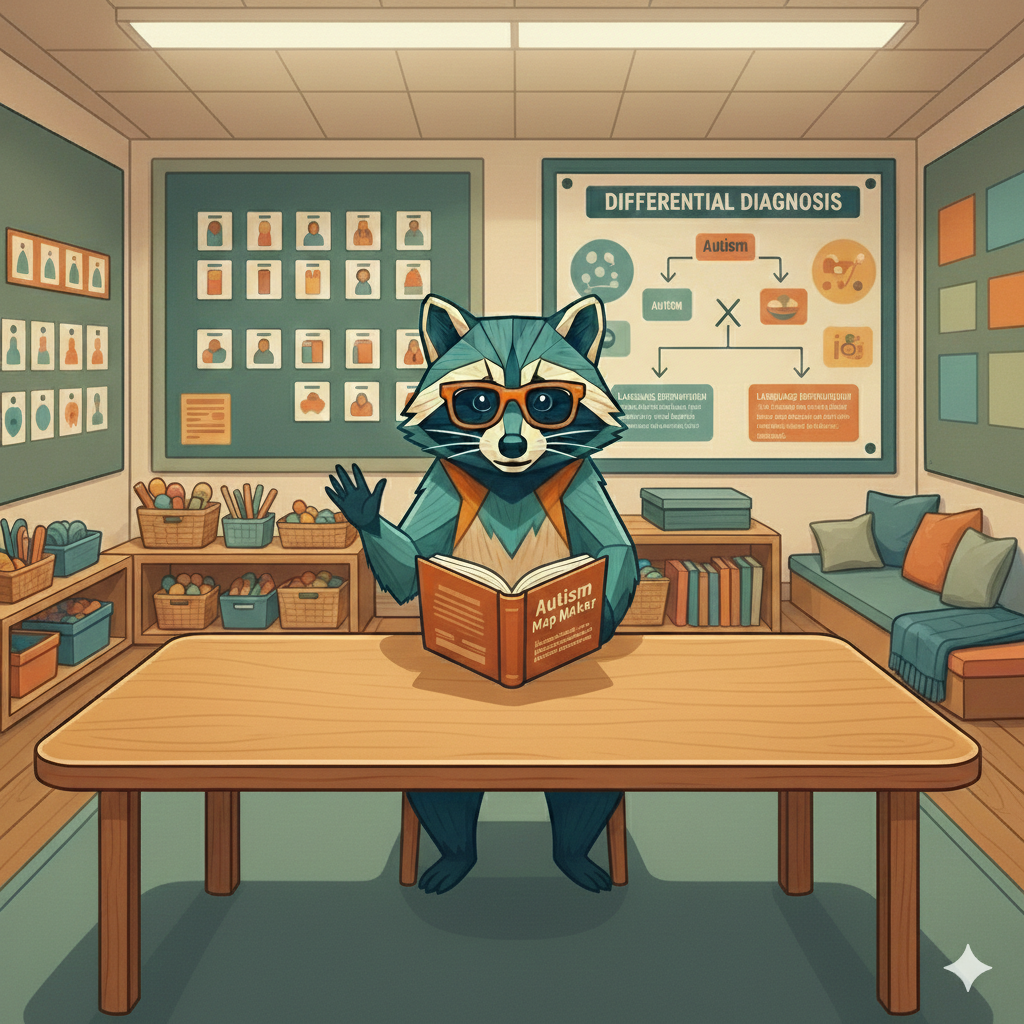
The Zone of Confusion: clear methods for differentiating Autism, Language Deprivation Syndrome (LDS), and Reactive Attachment Disorder (RAD), plus practical guidance on identifying the "Triple Diagnosis" (ASD+LDS+RAD) when they co-occur.
Diagnostic Adaptations: why gold-standard tools like the ADOS-2 can mislead without essential adaptations—such as using fluent ASL examiners and reframing eye contact as a cultural/neurological difference rather than a deficit.
The Device Illusion: an explanation of why a child who "tests at 20 dB" with implants may still be functionally deaf because of Central Auditory Processing Disorder (CAPD) and experiences like "painful static," and what that means for access to language.
Intervention as Diagnosis: the paradigm shift that makes the most definitive assessment not a score on a test but the child’s response when we intentionally flood their environment with accessible, linguistically appropriate input.
This work is a call to practice: regulate first, then teach; build language access before expecting compliance; and design systems that treat Deaf Autistic learners as whole people with dual, intersecting identities.
We founded Autism Map Maker on a simple, unshakeable truth: you cannot simply place a Deaf student in a mainstream Autism program, or an Autistic student in a Deaf program, and expect them to find their way. The convergence of Deafness and Autism creates an entirely new landscape—unique needs, communication profiles, and pathways to learning—that cannot be served by grafting one model onto the other. This volume functions as both manifesto and practical manual for those ready to chart a new course.
This curriculum deliberately rejects the deficit model that reduces our students to "broken ears" or "bad behavior." Instead, we affirm Dual Citizenship: our students are fully Deaf and fully Autistic, and we honor both identities with equal weight and respect. Volume 1 introduces critical frameworks you will use at intake, in classrooms, and in family partnerships.
Key Concepts in Volume 1:
The Zone of Confusion: clear methods for differentiating Autism, Language Deprivation Syndrome (LDS), and Reactive Attachment Disorder (RAD), plus practical guidance on identifying the "Triple Diagnosis" (ASD+LDS+RAD) when they co-occur.
Diagnostic Adaptations: why gold-standard tools like the ADOS-2 can mislead without essential adaptations—such as using fluent ASL examiners and reframing eye contact as a cultural/neurological difference rather than a deficit.
The Device Illusion: an explanation of why a child who "tests at 20 dB" with implants may still be functionally deaf because of Central Auditory Processing Disorder (CAPD) and experiences like "painful static," and what that means for access to language.
Intervention as Diagnosis: the paradigm shift that makes the most definitive assessment not a score on a test but the child’s response when we intentionally flood their environment with accessible, linguistically appropriate input.
This work is a call to practice: regulate first, then teach; build language access before expecting compliance; and design systems that treat Deaf Autistic learners as whole people with dual, intersecting identities.