Name the behavior. The map builds the differential — every cause it could be, and exactly what to do about each one.
Behavior is an error message, not a problem to suppress. The Whole-Picture Map helps you read it. Name one of 30 behaviors — from hair-pulling and head-banging to food refusal, elopement, scripting, or shutdown — and the tool builds a differential of the factors that could be driving it, drawn from research and clinical practice.
Answer what you saw — when it happens, whether the body might be involved, how the child seems in the moment. You don't need the right words; "not sure" widens the view instead of narrowing it. Your answers move the likely causes to the top and tuck the rest away.
For medically and scientifically possible causes, you get the same three-band response:
Check & refer — what to rule out, and when to involve a provider
Try now — immediate support you can offer in the moment
Build the skill — the longer work that makes the behavior unnecessary
It spans seven lenses — medical, sensory and interoceptive, body-focused repetitive behavior, comprehension and information access, regulation, language access, and behavioral function — so you see the whole picture instead of guessing at one.
These are possibilities to consider and check, not a diagnosis. For anything new, intense, or changing, rule out medical and pain causes with a provider first. And nothing you select is ever saved or sent — it runs entirely in your hands.
Advocacy · Connection · Community
Name the behavior. The map builds the differential — every cause it could be, and exactly what to do about each one.
Behavior is an error message, not a problem to suppress. The Whole-Picture Map helps you read it. Name one of 30 behaviors — from hair-pulling and head-banging to food refusal, elopement, scripting, or shutdown — and the tool builds a differential of the factors that could be driving it, drawn from research and clinical practice.
Answer what you saw — when it happens, whether the body might be involved, how the child seems in the moment. You don't need the right words; "not sure" widens the view instead of narrowing it. Your answers move the likely causes to the top and tuck the rest away.
For medically and scientifically possible causes, you get the same three-band response:
Check & refer — what to rule out, and when to involve a provider
Try now — immediate support you can offer in the moment
Build the skill — the longer work that makes the behavior unnecessary
It spans seven lenses — medical, sensory and interoceptive, body-focused repetitive behavior, comprehension and information access, regulation, language access, and behavioral function — so you see the whole picture instead of guessing at one.
These are possibilities to consider and check, not a diagnosis. For anything new, intense, or changing, rule out medical and pain causes with a provider first. And nothing you select is ever saved or sent — it runs entirely in your hands.
Advocacy · Connection · Community
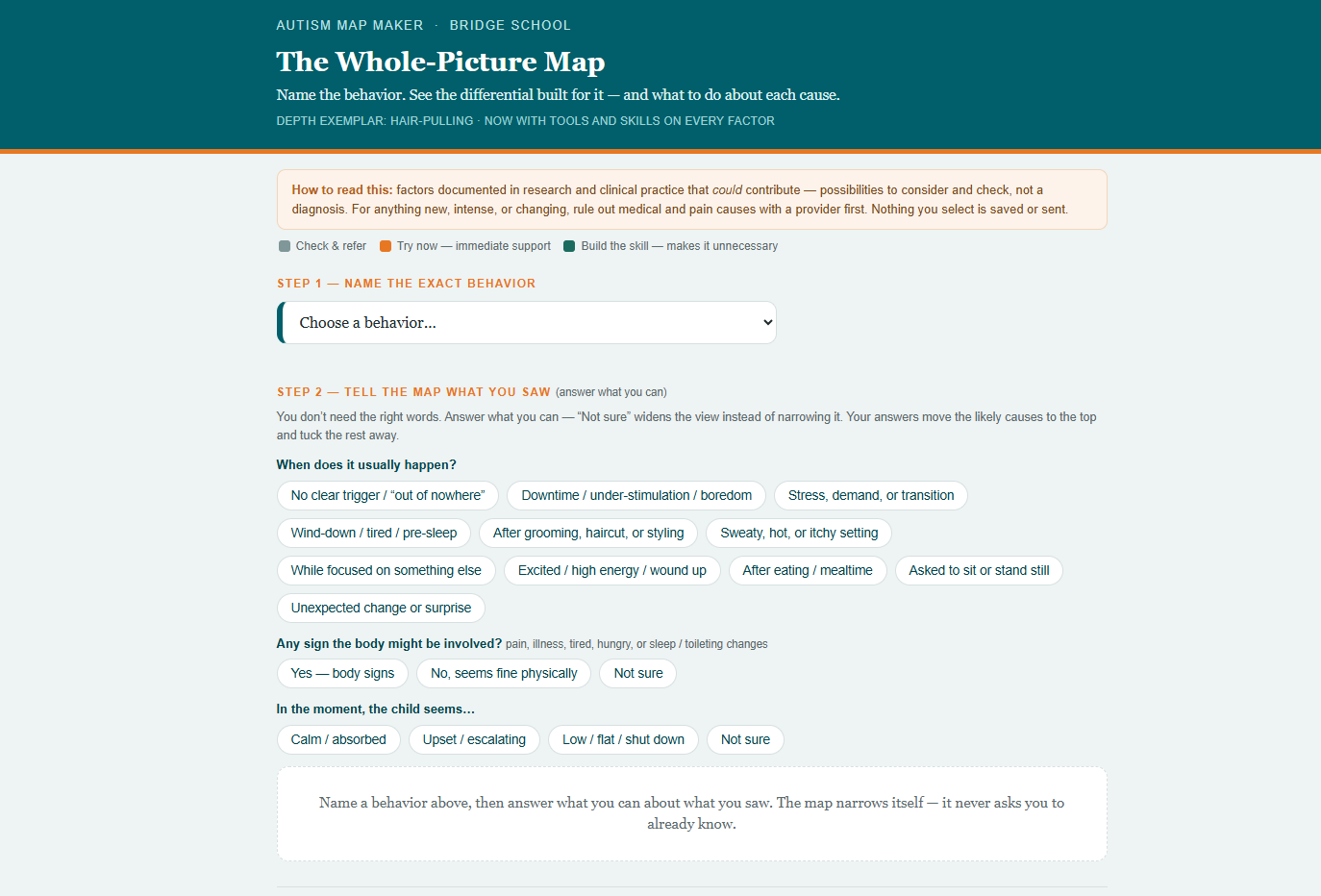 Image 1 of 11
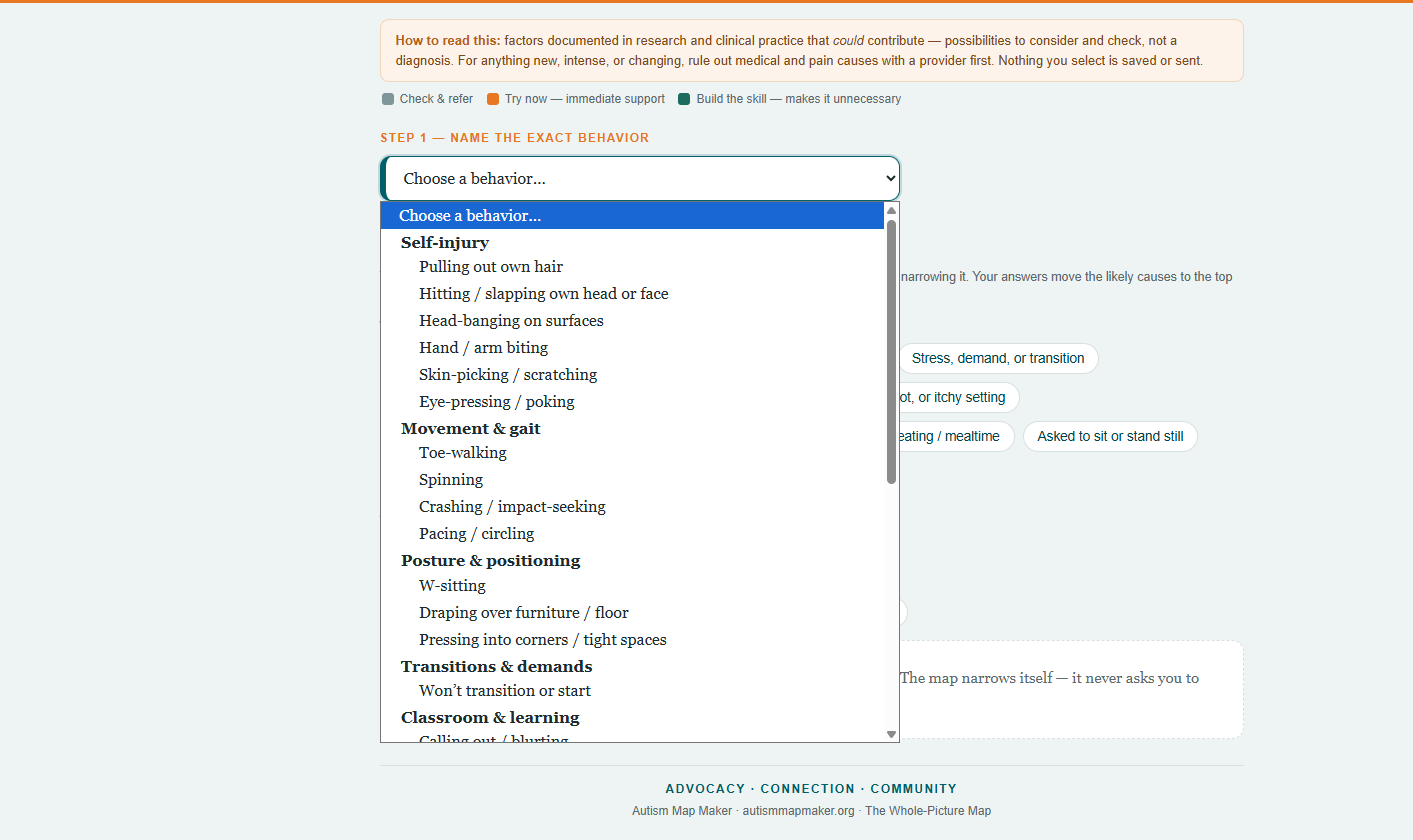 Image 2 of 11
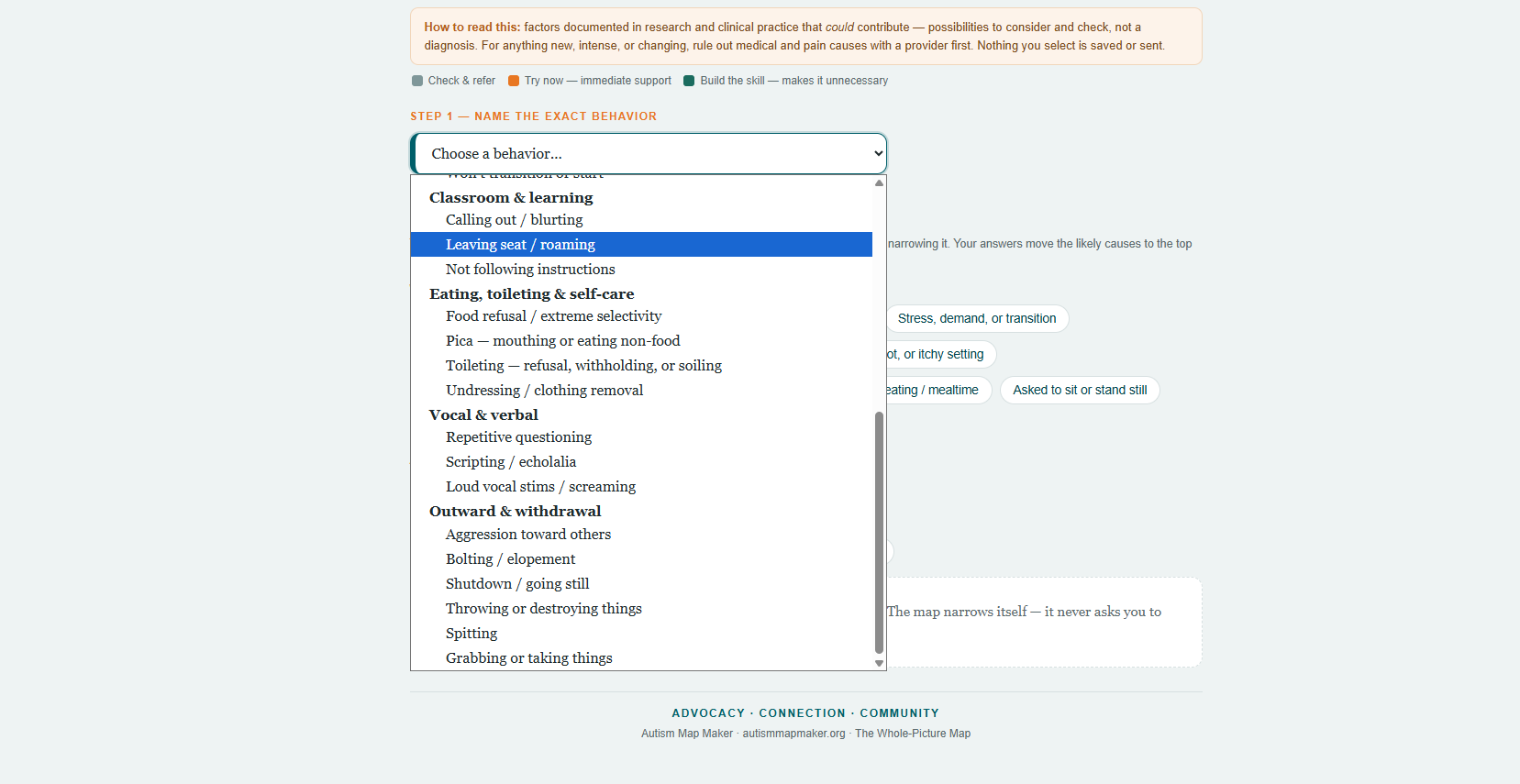 Image 3 of 11
 Image 4 of 11
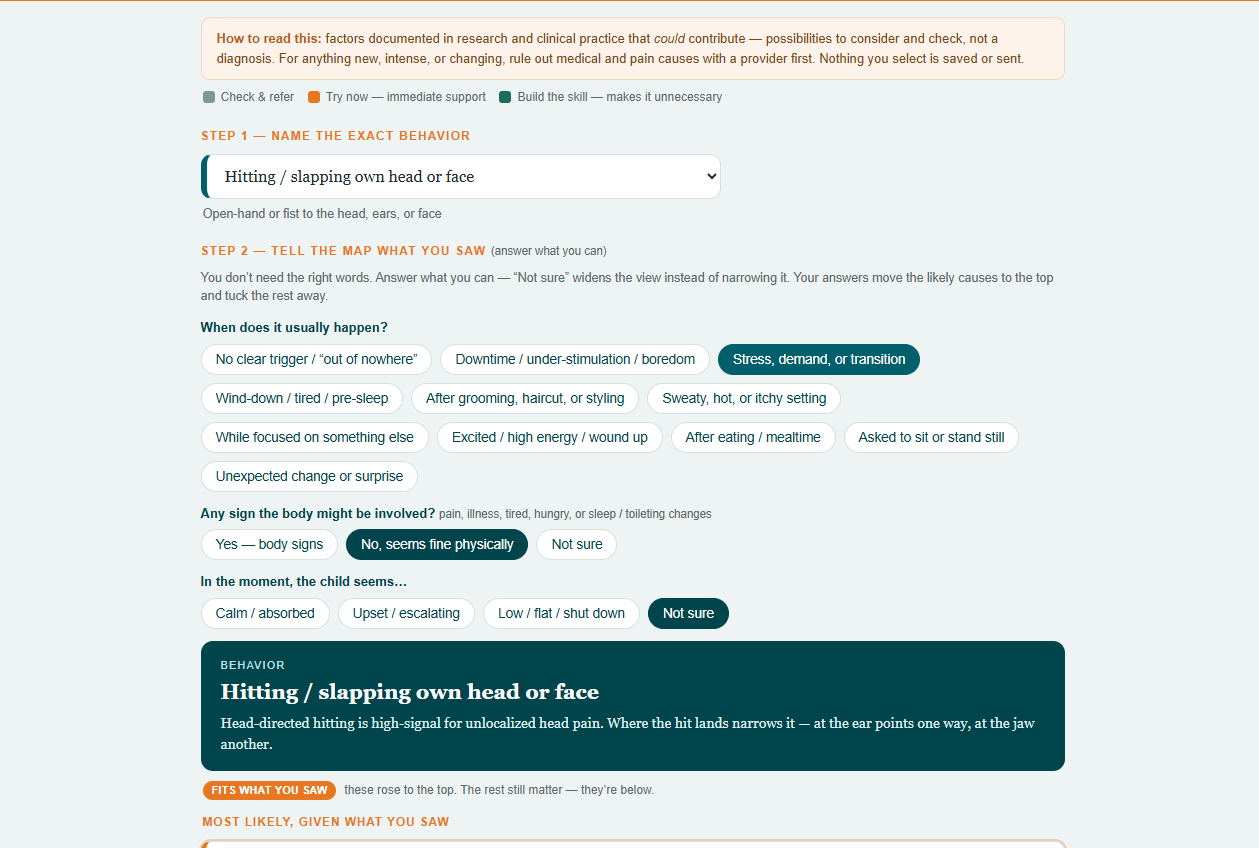 Image 5 of 11
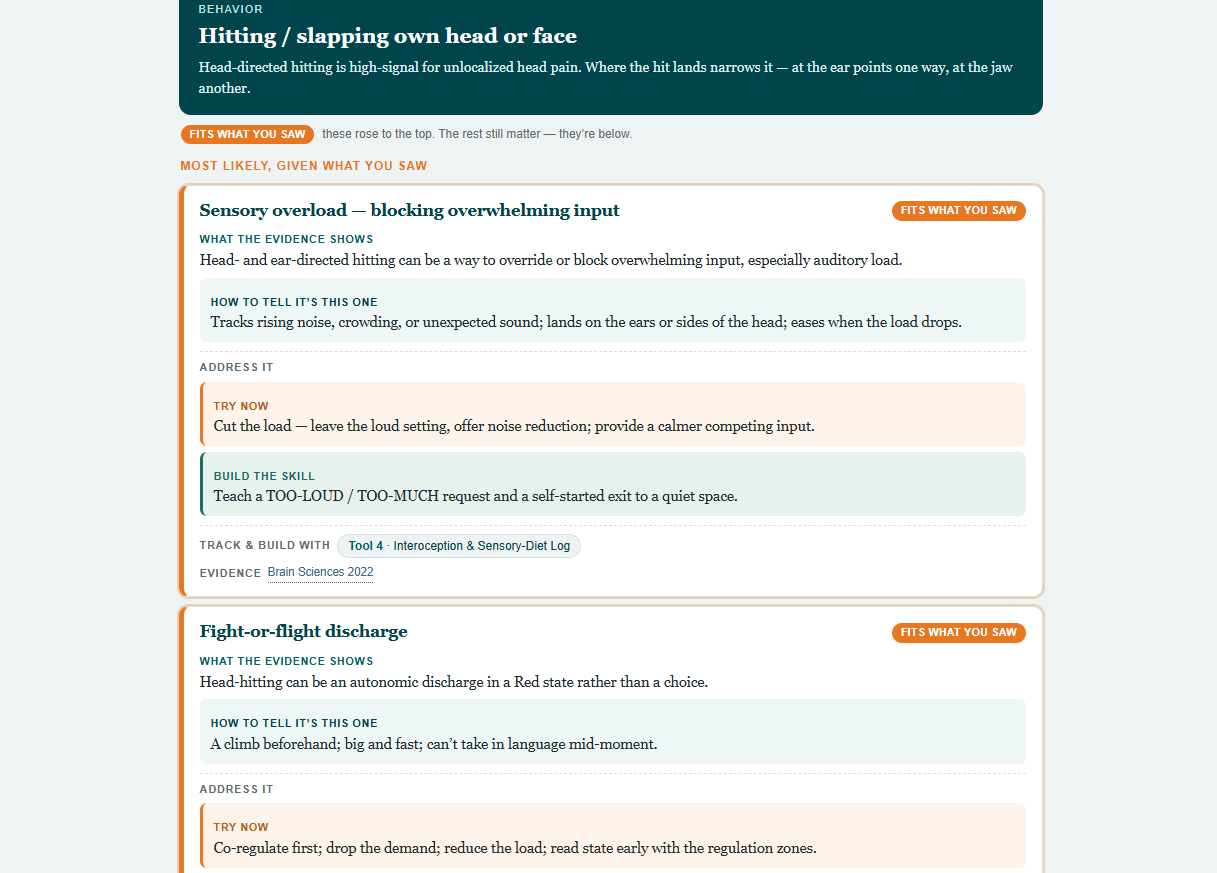 Image 6 of 11
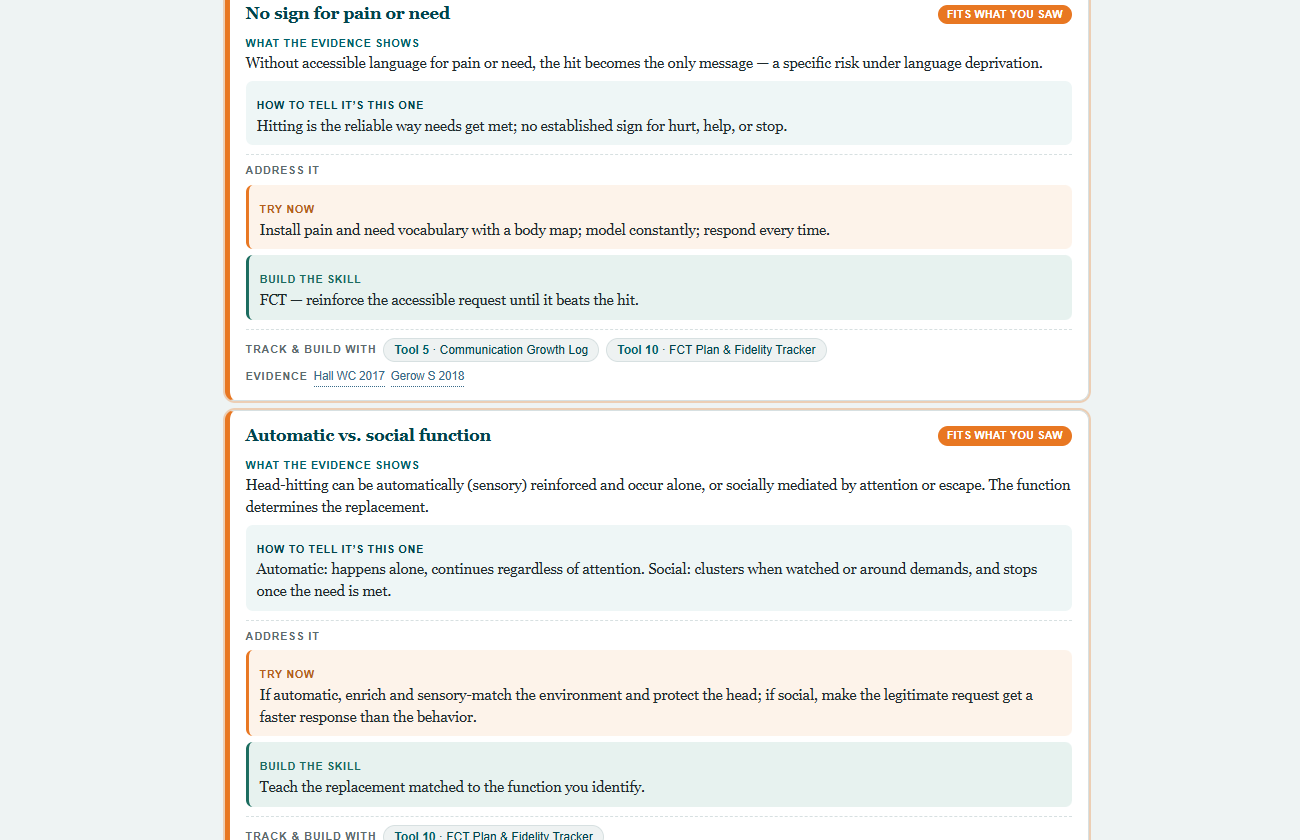 Image 7 of 11
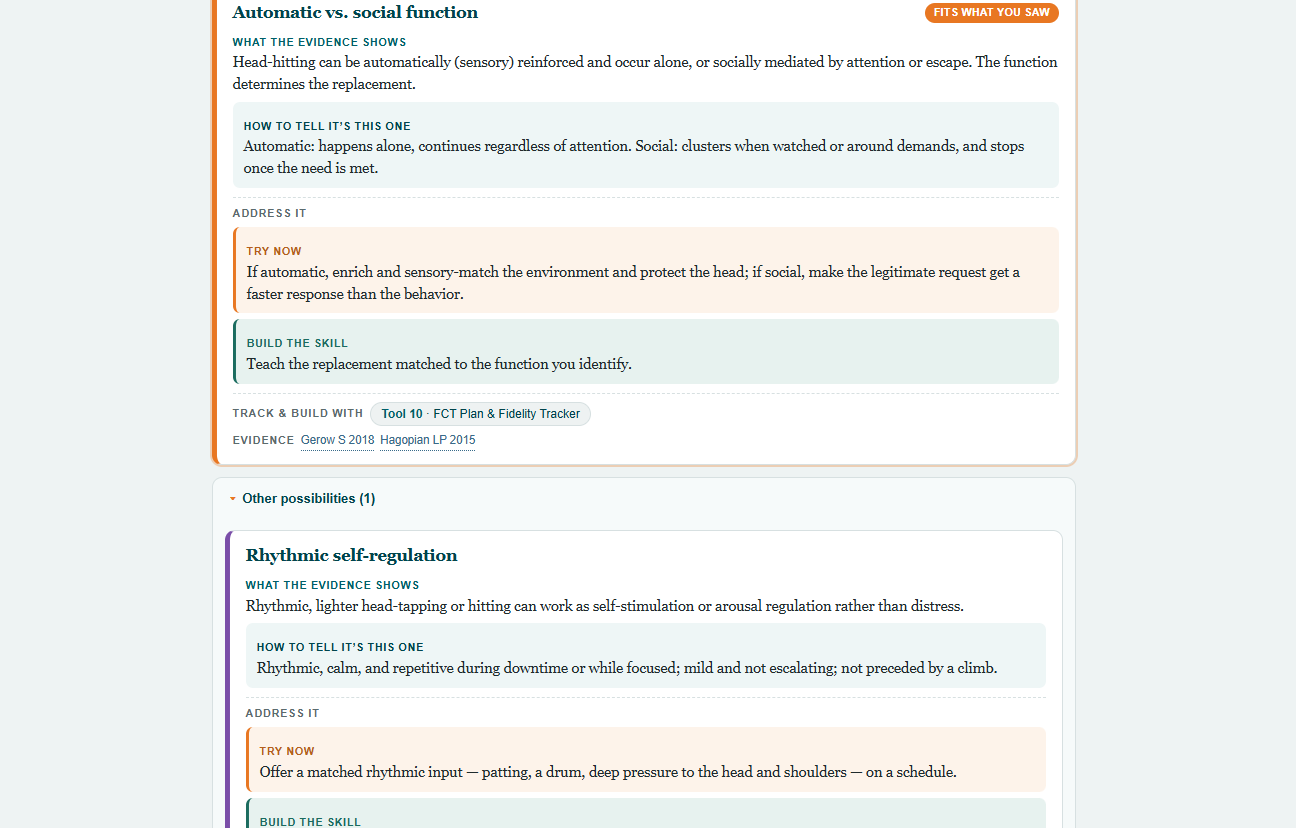 Image 8 of 11
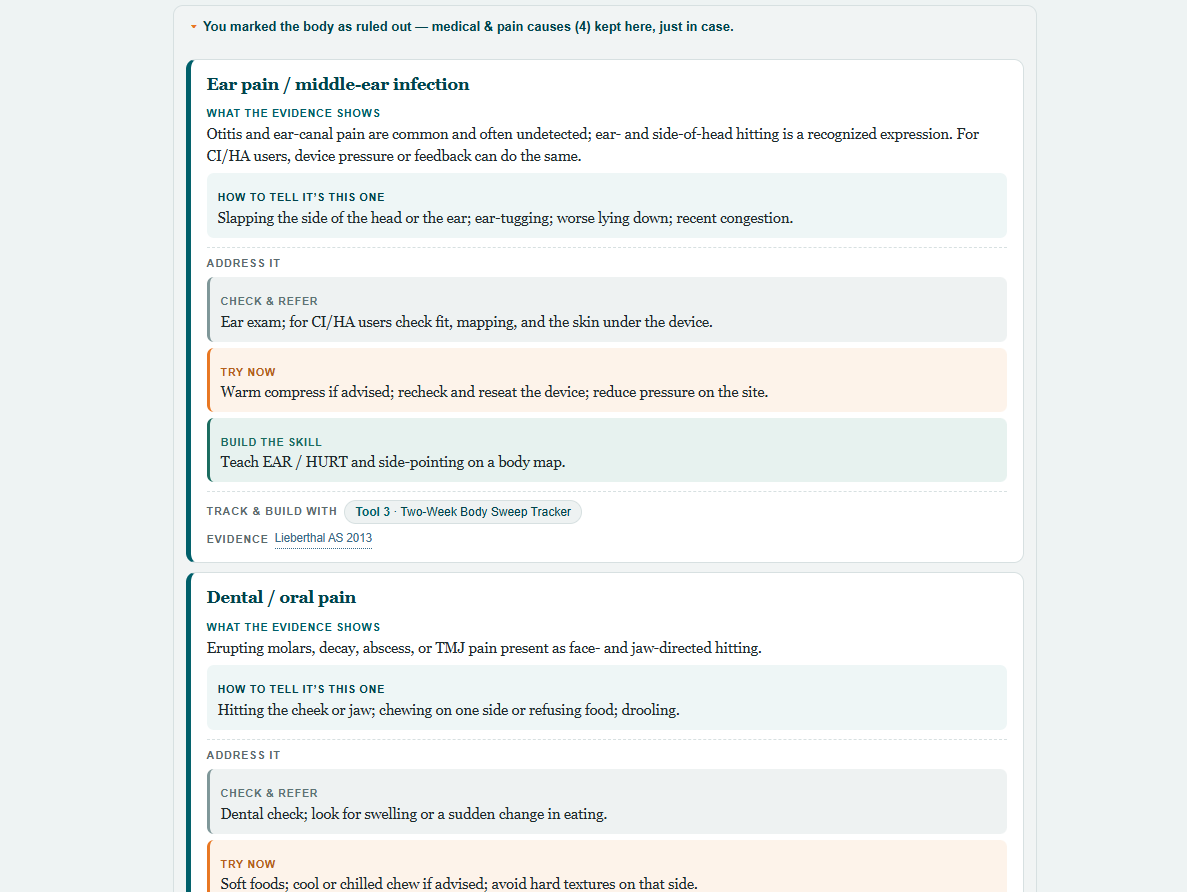 Image 9 of 11
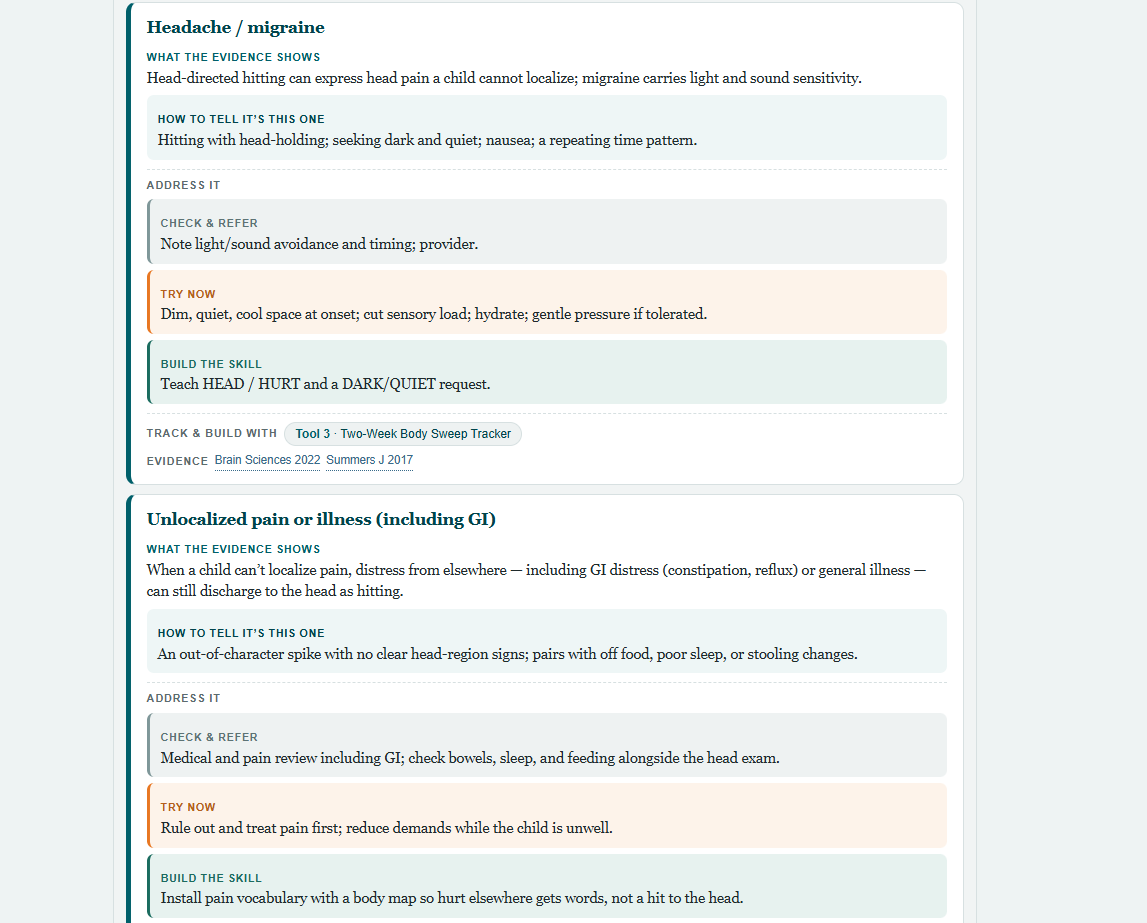 Image 10 of 11
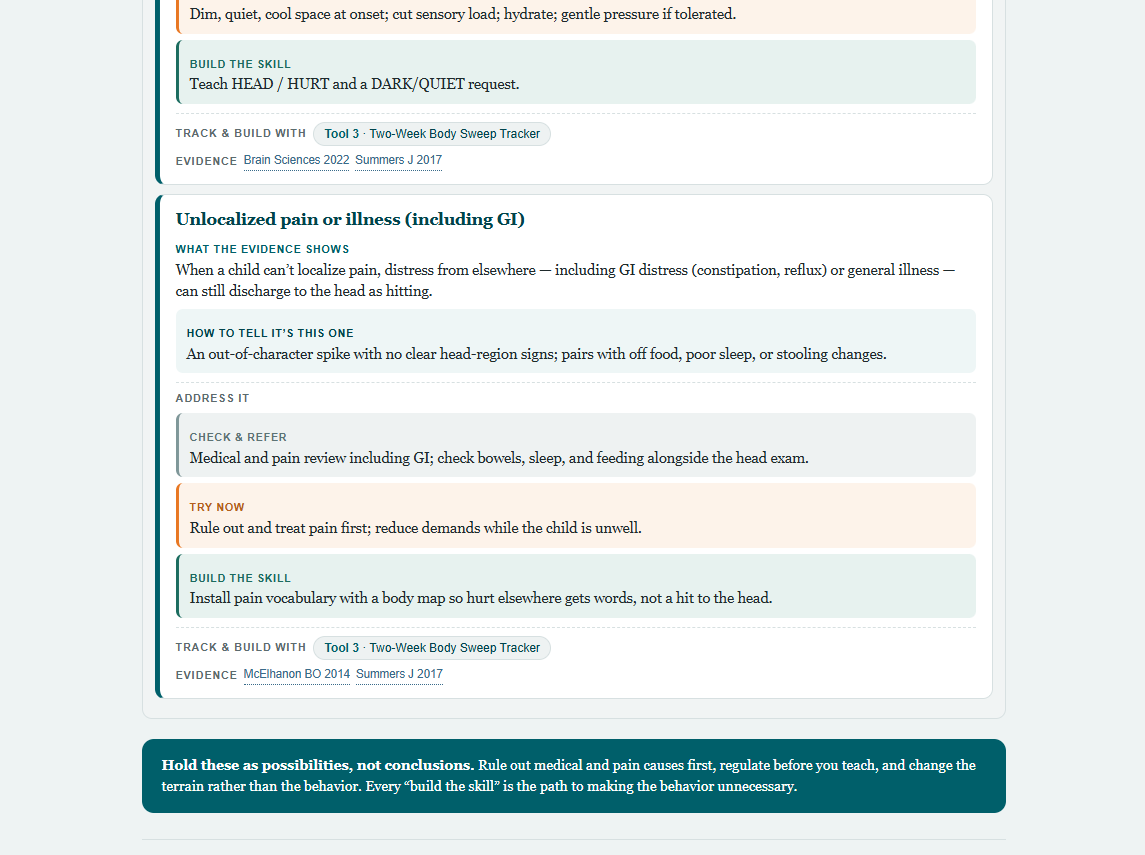 Image 11 of 11