 Image 1 of 4
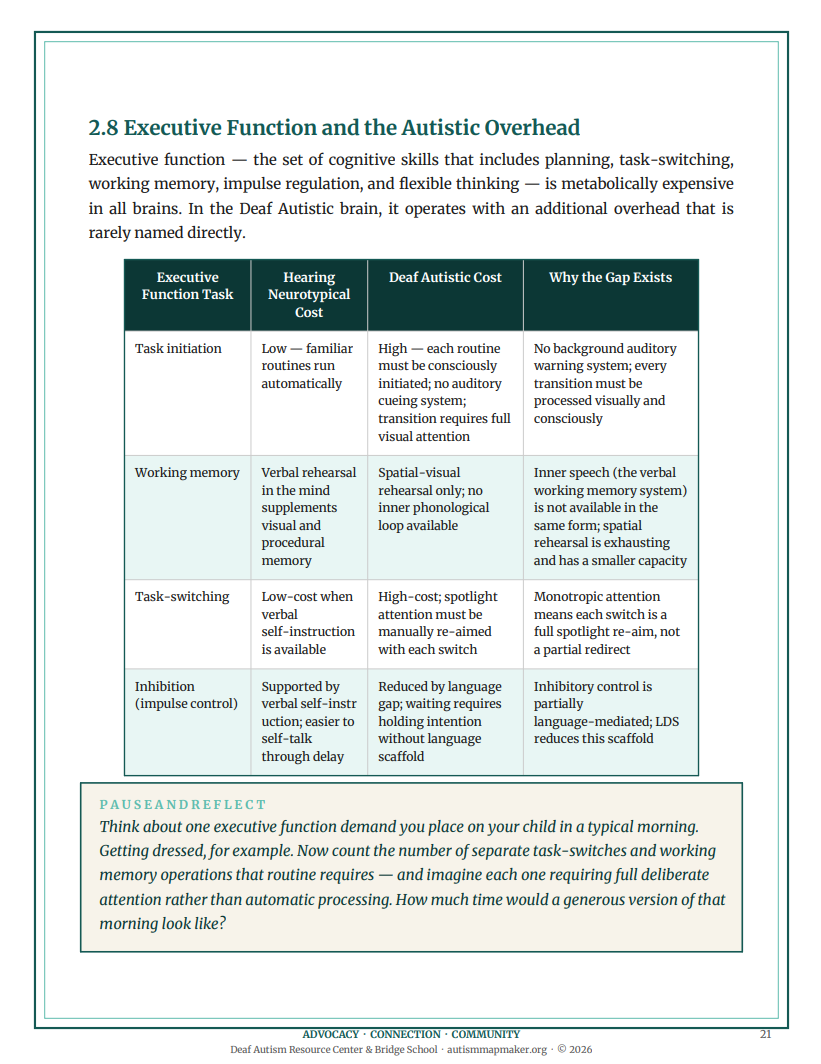 Image 2 of 4
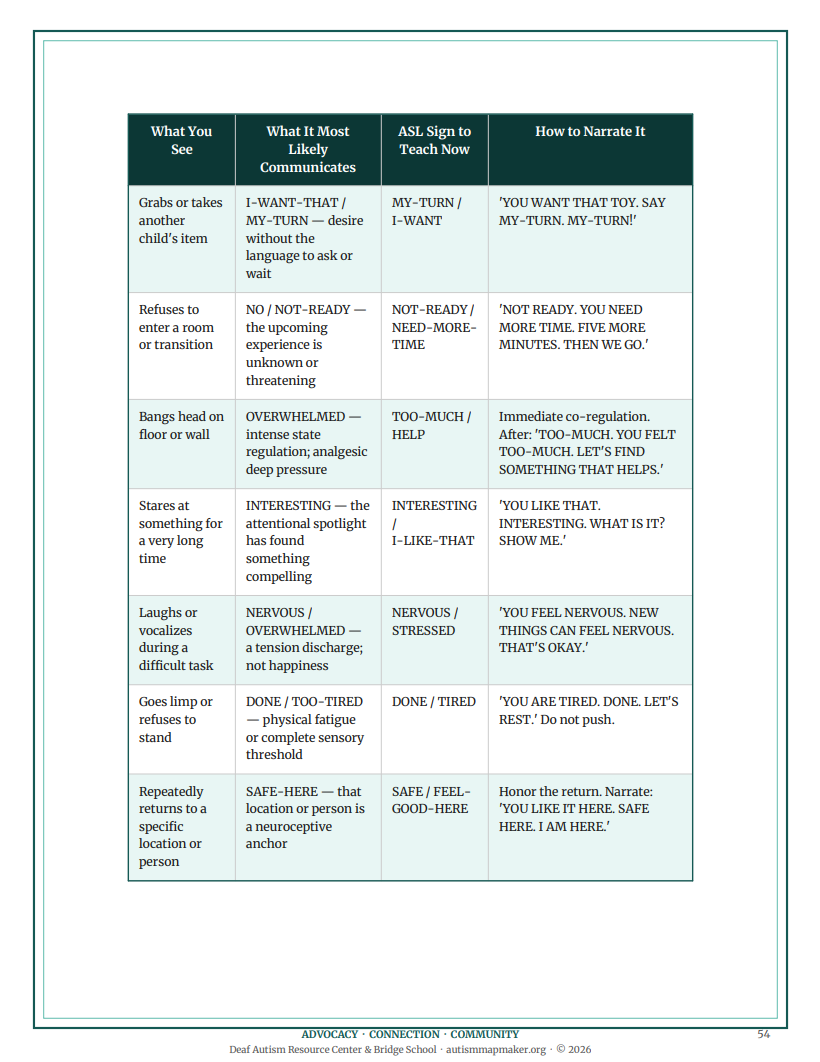 Image 3 of 4
 Image 4 of 4
Here’s our yearly updated complete field manual for families, educators, clinicians, therapists, and support staff navigating the unique intersection of a Deaf Autistic child's world.
At its core, this guide is built on a fundamental neurobiological truth: a Deaf Autistic child's brain is not broken. It is a high-performance specialized operating system running in an environment that was never designed for it. Our job is to change the environment, not the child.
This guide rejects standard medical deficit models in favor of an architectural blueprint. Rather than looking for what is broken, it translates the precise mechanics of how the intersectional mind processes reality:
Dual Citizenship: The child is not partly Deaf and partly Autistic. They hold full citizenship in both worlds, creating a third, distinct territory with its own strengths, vulnerabilities, and language channel requirements.
Behavior Is a Coordinate: We do not manage behavior; we translate it. Every baseline spike, meltdown, or shutdown is treated as an investigator's clue to decode sensory gating, autonomic states, or hidden physical pain.
The Information Deprivation Trap & Trauma Loop: A deep look at how a pattern-seeking brain builds false maps when starved of accessible language, how to identify chronic sympathetic baseline arousal, and exactly how to break the loop using Total Visual Transparency.
The 70-Bit Reality & Double Visual Load: Managing the immense metabolic cost on a visual channel forced to handle language reception, social decoding, and constant environmental safety scanning simultaneously without auditory backup.
The Device Illusion: Unpacking why sound detection does not equal language comprehension, how effortful decoding drives visual burnout, and how to verify true visual language access.
Language Pathways as Neural Architecture: Rebuilding conceptual gaps, expanding ASL Gestalt Language Processing, and establishing complete, functional language environments rather than simple noun labeling.
Read the guide in order the first time to build a shared team map, then treat it as an active reference to jump directly to today's specific challenge. Every chapter delivers clear, jargon-free science, non-negotiable Map Maker standards, practical action protocols, and real ASL conversational scripts.
The manual also includes brief, practical tools in the appendices (including the Emergency Communication Passport, Home Sensory Profile, and Behavior Detective sheets) to ensure your entire team stays perfectly aligned.
By shifting from a model of deficit to a model of architecture, this guide helps your team move your child's daily reality from mere survival to genuine connection.
Here’s our yearly updated complete field manual for families, educators, clinicians, therapists, and support staff navigating the unique intersection of a Deaf Autistic child's world.
At its core, this guide is built on a fundamental neurobiological truth: a Deaf Autistic child's brain is not broken. It is a high-performance specialized operating system running in an environment that was never designed for it. Our job is to change the environment, not the child.
This guide rejects standard medical deficit models in favor of an architectural blueprint. Rather than looking for what is broken, it translates the precise mechanics of how the intersectional mind processes reality:
Dual Citizenship: The child is not partly Deaf and partly Autistic. They hold full citizenship in both worlds, creating a third, distinct territory with its own strengths, vulnerabilities, and language channel requirements.
Behavior Is a Coordinate: We do not manage behavior; we translate it. Every baseline spike, meltdown, or shutdown is treated as an investigator's clue to decode sensory gating, autonomic states, or hidden physical pain.
The Information Deprivation Trap & Trauma Loop: A deep look at how a pattern-seeking brain builds false maps when starved of accessible language, how to identify chronic sympathetic baseline arousal, and exactly how to break the loop using Total Visual Transparency.
The 70-Bit Reality & Double Visual Load: Managing the immense metabolic cost on a visual channel forced to handle language reception, social decoding, and constant environmental safety scanning simultaneously without auditory backup.
The Device Illusion: Unpacking why sound detection does not equal language comprehension, how effortful decoding drives visual burnout, and how to verify true visual language access.
Language Pathways as Neural Architecture: Rebuilding conceptual gaps, expanding ASL Gestalt Language Processing, and establishing complete, functional language environments rather than simple noun labeling.
Read the guide in order the first time to build a shared team map, then treat it as an active reference to jump directly to today's specific challenge. Every chapter delivers clear, jargon-free science, non-negotiable Map Maker standards, practical action protocols, and real ASL conversational scripts.
The manual also includes brief, practical tools in the appendices (including the Emergency Communication Passport, Home Sensory Profile, and Behavior Detective sheets) to ensure your entire team stays perfectly aligned.
By shifting from a model of deficit to a model of architecture, this guide helps your team move your child's daily reality from mere survival to genuine connection.